Portfolio Made with AI 2026.04.26 / Essay
I am currently learning programming and AI.
“Programming,” in my case, means learning PHP and HTML/CSS — just enough for WordPress. But why, now of all times, am I learning programming, a field that will likely be transformed beyond recognition by the rise of AI? I had long assumed, somewhat arrogantly, that WordPress would quietly fade before too long. Then one day, for no reason I can quite explain, I suddenly felt I had to learn it — and before I knew it, I had already begun. That’s the honest truth.
I moved to Shonan a year ago and have been living a leisurely life, taking daily walks along the ocean and through the greenery, so I hadn’t really kept up with AI either. YouTube, it seemed, had quietly filled with AI explainer videos and seminar ads while I wasn’t looking. So, to learn both the trendy AI and the not-so-trendy programming at the same time, I started by making something freely, in my own way — and that became this site, Identity.
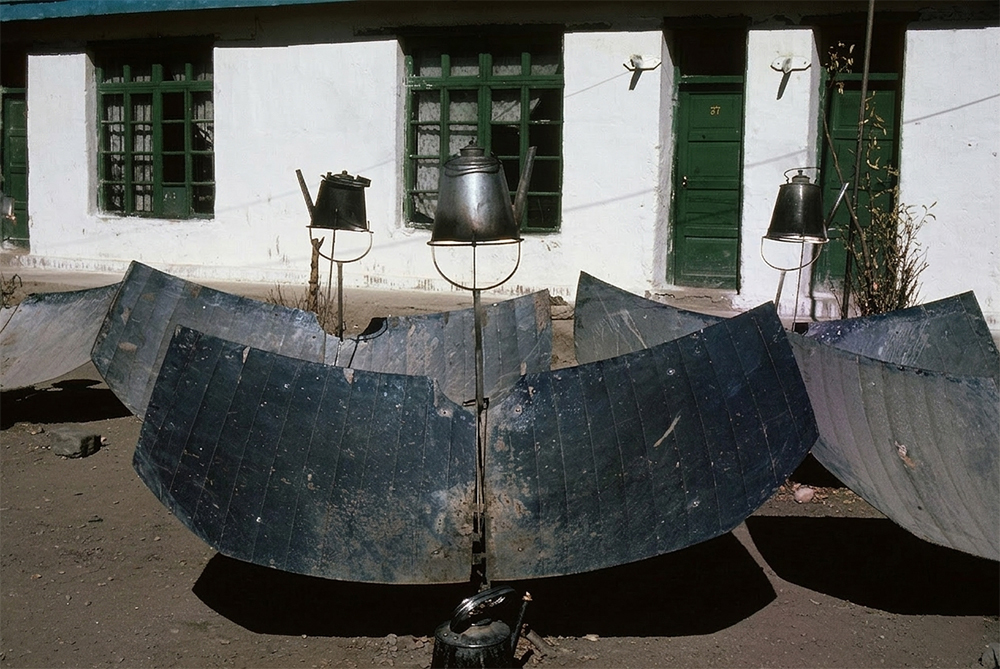
The reason I decided to use my Tibet photographs from 1987 was that I wanted to try restoring their blue casts and fading using Photoshop’s AI generation tools. And when I pulled out those old photos and looked through them, I realized anew that those were the years I was working most like myself. I found myself wanting to look back.
I found WordPress learning materials online and started with an assignment to convert a university website to WordPress. I made so many errors in my PHP that I might have spent entire days staring at the screen on my own — but when I asked AI to compare and check, it came back instantly: “I found the cause.” AI got a feel for WordPress structure faster than expected, and so I decided to build a portfolio. For logo design, which I struggle with, and for code, scroll-down effects, and hover animations, I asked AI to teach me. For code I had forgotten or hadn’t yet learned, I had it build me a single practice page incorporating those elements. When I asked, “Please make a practice page using overlay, absolute, hidden, and grid,” a page called “Shonan Travel Agency” appeared in an instant. It reads ordinary conversational language perfectly well, so there was no need to learn any advanced prompting. By the time I finish a thick programming textbook, AI will have evolved even further. I thought: it’s enough to use it in a way that suits my needs right now, without pushing myself — as long as I can make even one thing I’m truly satisfied with.
Back in 1987, cameras still used film, so even after going all the way to Tibet, I had no way of knowing whether the photos had turned out properly until I was back in Japan. Personal computers weren’t yet widespread, and print was the dominant medium. I used to love selecting reversal film on a lightbox and arranging it mentally on the pages of an imagined magazine layout. As I work on this project, a thought occasionally strikes me: perhaps the sudden urge to learn programming was simply a desire for a frame — a frame in which to display my photographs. A simple frame that lets the photographs breathe. A beautiful frame with carefully considered space. In the future, AI will likely generate WordPress layouts that anyone can use immediately. But without understanding the underlying structure to some degree, you can’t make something that’s truly your own. There is a part I cannot hand over to anyone — that part, I wanted to keep in my own hands.